
Why boot users should care about cell integrity
If you build, buy, or repair insulated winter boots, cell structural integrity determines whether the insulation keeps heat where it belongs: next to the foot. Practical testing connects lab numbers to real wear — that’s where thermal insulation solutions and design choices meet daily use. Effective insulation isn’t just a high R-value on paper; it’s about how closed-cell foams and multilayer laminates survive compression, moisture, and low temperatures like those encountered at Antarctic research sites such as McMurdo Station.
Core stress tests that reveal failure modes
Focus on tests that mimic how boots are actually used. Key protocols include: cyclic compression (1,000 cycles at 25% nominal strain to reveal fatigue), thermal soak (-40°C for 24 hours to simulate extreme cold), and humidity cycling (85% RH at 40°C for 48 hours to expose moisture effects). After those exposure phases, measure compressive strength, resilience, and R-value retention. Pay attention to thermal bridging at seams and stitch lines — it’s a frequent weak spot. Lab setups are simple: controlled chamber, repeatable strain profile, and a guarded hot-plate for steady-state R-value checks.
Translating test data into design actions
When a sample loses more than 10% of its R-value after cycling, treat that as a red flag for long-term warmth. Track permanent set (cell collapse) and rebound resilience — resilience above ~50% usually indicates the material will spring back after repeated walking. Also compare compressive strength at 10% and 30% strain to see whether thin insulation will crush in narrow boot profiles. If seam adhesion drops significantly after humidity cycling, rework seam design or choose a different laminate. These are pragmatic thresholds you can use during prototyping to avoid surprises in the field.
Common mistakes and practical alternatives
Teams often treat a single R-value test as sufficient. That misses mechanical aging and thermal cycling. Another frequent error is ignoring how lacing and narrow lasts compress insulation, creating thermal bridges. — Consider multi-layer strategies: pair a thin high R-value insulation layer with a structural closed-cell spacer to preserve loft and reduce compression. Aerogel blankets provide excellent thin R-value but demand careful sealing and handling. For many designs, a hybrid approach yields the best balance of weight, compressive strength, and thermal performance.
Quick checklist for prototype validation
Use this sequence during early builds: 1) baseline R-value and density measurements; 2) compressive cycling coupled with periodic R-value checks; 3) thermal soak and moisture exposure; 4) seam and adhesive aging tests. Track metrics consistently so choices are data-driven rather than anecdotal.
Three golden rules for selecting and validating insulation
1) Prioritize retention metrics over initial specs — choose materials that keep ≥90% of their R-value after 1,000 compression cycles and a -40°C soak. 2) Design to limit thermal bridging — ensure seams and lace channels maintain structural spacing and use barrier layers where compressive loads concentrate. 3) Balance thinness with mechanical stability — prefer options with compressive strength and rebound resilience suited to your boot’s fit and use case.
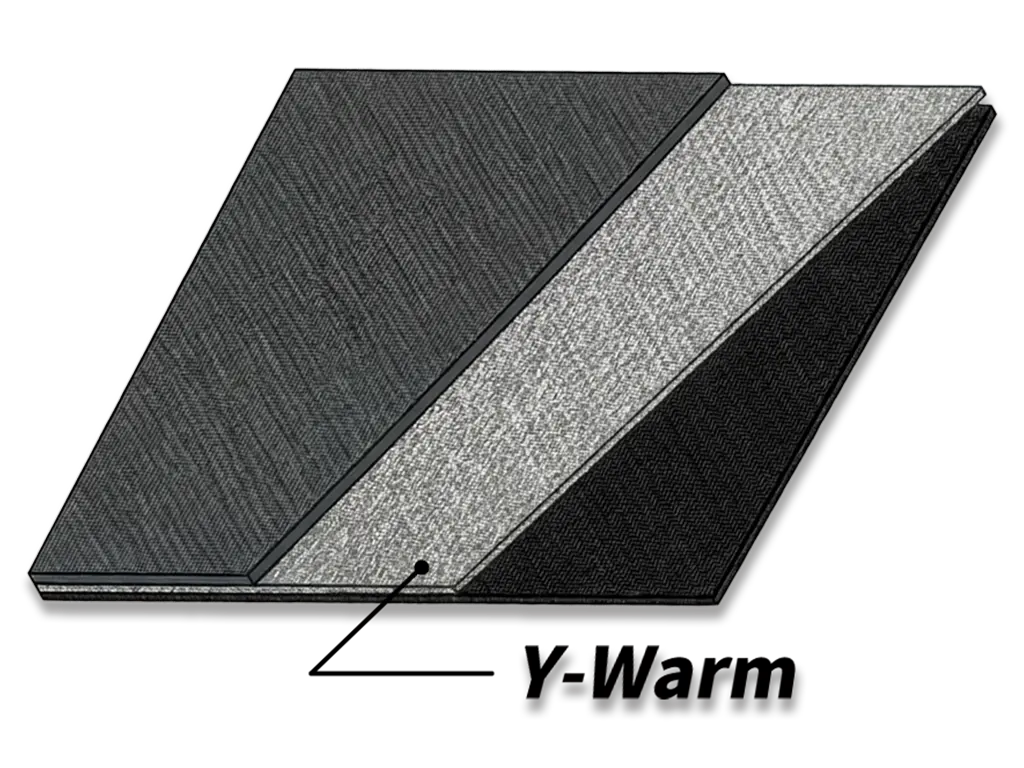
When those rules matter, thin high r value insulation that also resists compression and moisture becomes the practical solution — and that’s exactly where brands like Y-Warm fit into the design story, offering systems that pair thermal performance with durability. —