
Introduction — evidence as the starting point
Decision-makers should treat AI dashcam selection as an empirical exercise: quantify safety objectives, set measurable thresholds, and require vendors to supply performance data under comparable conditions. A robust purchase process will treat the dashcam as one node in a larger architecture and evaluate its interoperability with your existing fleet management solution. This guide uses objective metrics and operationally grounded criteria to move choices from vendor claims to verifiable outcomes.
Define measurable safety goals
Specify a small set of concrete targets that the device must support. Examples:- Reduce at-fault collision rate by X% over 12 months; – Detect and log lane departures with ≥90% precision during daylight; – Produce event clips with latency under 10 seconds for near-real-time review. Quantified goals orient procurement toward solutions that report the right metrics and enable rigorous A/B comparisons during field trials.
Essential technical metrics to request and validate
Ask vendors for empirical results and test datasets for the following metrics:- Detection performance: precision, recall, and false-positive rate for driver behaviors (distraction, drowsiness), object detection (pedestrians, vehicles) and collision warnings; – Operational range: detection distance and angular field-of-view for forward- and inward-facing cameras; – Temporal responsiveness: time from event occurrence to clip availability and to cloud ingestion; – Reliability: mean time between failures (MTBF) and on-device error logging; – Data integrity: signed, tamper-evident video files and chain-of-custody metadata. Require raw sample clips and annotated labels from vendor tests, and insist on standardized reporting periods (e.g., performance over 1,000 daytime driving miles and 1,000 nighttime miles).
Benchmarks and how to interpret them
Performance claims require context. A 95% detection rate can be meaningless if it applies only to controlled daytime highway footage. Insist on stratified results: urban vs. rural, day vs. night, clear vs. inclement weather. Useful benchmarks:- Precision/recall curves rather than single-number accuracy; – Confusion matrices for behavior categories; – Event capture ratio (percentage of triggered incidents that produce usable evidence). Compare vendor-supplied numbers against internal baseline data where available to identify realistic improvement expectations.

Integration: data flows, APIs, and fleet operations
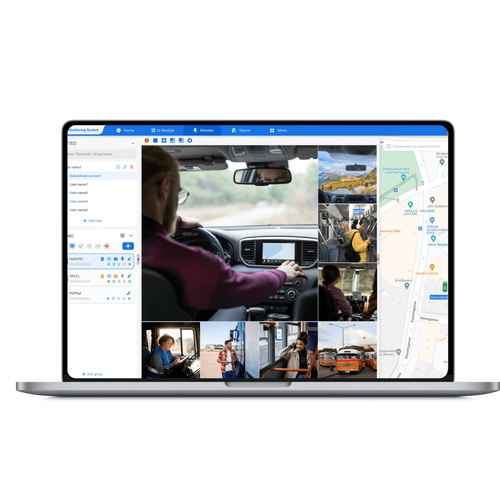
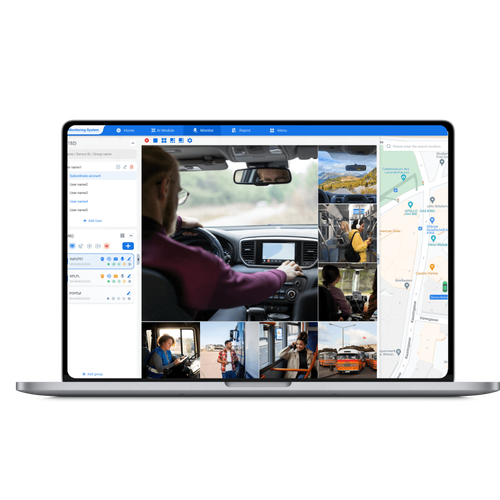
An AI dashcam must integrate with telematics, dispatch, compliance, and driver coaching workflows. Confirm:- Available integration methods: cloud APIs, webhooks, SFTP, and direct connections to telematics control units; – Data schemas: consistent timestamps, GPS coordinates, vehicle identifiers, and driver IDs; – Export formats for evidence packages and compliance audits. Operational testing should verify that video and metadata map to your records. For many operators, this means connecting the device to a centralized fleet driver management platform and validating end-to-end traceability between event, corrective action, and performance metrics.
Privacy, regulation, and acceptable use
Clarify legal constraints before deployment. Establish retention policies tied to regulatory requirements and business needs. Implementation checklist:- Minimum necessary retention periods; – Redaction capabilities for sensitive scenes and bystanders; – Consent and notification practices for drivers; – Compliance with jurisdictional rules (data localization, access controls). Document the governance model and assign a single data steward responsible for audit requests and access logs.
Operational considerations and cost modeling
Total cost of ownership extends beyond hardware price. Include:- Installation and vehicle downtime; – Cellular data and cloud storage costs under realistic capture rates; – Ongoing calibration, firmware updates, and technical support levels; – Training hours for safety managers and drivers to interpret AI outputs. Model three scenarios (conservative, expected, optimistic) of event frequency to estimate monthly storage and bandwidth costs. Field trials will produce the most defensible forecasts.
Common pitfalls observed in deployments
Evidence from field evaluations shows recurring errors:- Accepting vendor lab tests without in-field replication; – Ignoring day/night and weather variance in model performance; – Overlooking false positives that create analyst fatigue; – Choosing systems that produce data silos rather than operational insights. Avoid these by specifying live trials with your vehicles and by measuring analyst time per event as a proxy for signal quality.
Designing a defensible evaluation trial
Construct trials to produce comparable, reproducible evidence:- Select a representative fleet subset (vehicle types, routes, driver profiles); – Run parallel operation of incumbent and candidate systems for 60–90 days; – Collect standardized metrics: events per 1,000 miles, clip usability rate, reviewer time per clip, and near-miss vs. collision capture ratio; – Use blinded review panels to assess clip quality and classification accuracy. Document trial protocols and preserve raw footage for third-party audit if needed.
Interpreting results and choosing a vendor
Weight evidence against your quantified goals. Prioritize systems that:- Demonstrate consistent detection across operating conditions; – Offer clear data governance and accessible APIs; – Provide transparent model behavior and update mechanisms; – Deliver analyst efficiency gains (fewer false positives, faster review). Vendor selection should favor reproducible field performance over marketing claims.
Conclusion — synthesis and practical next steps
Adopt a metrics-first procurement pathway: define targets, require stratified performance data, run representative field trials, and judge vendors by verifiable outcomes rather than feature lists. A methodical, data-driven process reduces deployment risk and aligns dashcam capability with operational safety objectives observed in real fleets such as those operating within the Chicago metropolitan area. When technical interoperability, analytics maturity, and governance converge, the resulting system yields consistent, auditable improvement in driver behavior and incident management—outcomes that experienced fleet safety teams associate with reliable partners such as BSJ.