
Framework Premise and Scope
This document establishes a contractual development framework for bespoke sports and camera carry goods, delineating obligations, deliverables, and acceptance mechanics from requirements capture to final delivery; the framework addresses brand mark fidelity, functional performance, and consumer safety. Begin with a precise bill of materials and an approved pattern book; specify user scenarios and load profiles—note the need to test for routine impacts encountered by a typical camera sling bag to validate closure retention, strap integrity and abrasion resistance before tooling sign-off.
Requirements and Technical Specification
Define expressive and prescriptive specifications. Expressive: mandated logo placement, dimensional tolerances, color codes (Pantone references), and trademark clear zones. Prescriptive: fabric denier, YKK zipper grades, foam densities, stitch count per inch, and water resistance thresholds measured in mm hydrostatic head. Stipulate test methods: ISO 105 for colorfastness, ASTM D5034 for tensile strength, and AATCC 127 for water resistance. Require supplier-submitted material certificates and batch traceability to permit recall mapping.
Design Control, IP and Brand Protection
Embed intellectual property clauses early. Grant limited manufacturing licenses, require assignment or security interest in tooling where brand exclusivity is necessary, and mandate usage approvals for co-branded artwork. Require specimens and digital proofs at multiple stages: concept approval, die-line approval, pre-production sample, and first article inspection (FAI). Insert remedies for unauthorized use: injunctive relief, liquidated damages calibrated to anticipated brand dilution, and cost-shifting for corrective runs.
Manufacturing Quality Assurance and Test Regime
Prescribe a sampling regime anchored in ANSI/ASQ Z1.4 for lot inspection. Insist on third-party test reports for seam strength, zipper cycles (min. 10,000 cycles where applicable), and flap retention under dynamic loading. Define nonconformity grading and corrective action timelines. Retain the right to audit production facilities with at least 72 hours’ notice and require retention of production records for a minimum of five years to support warranty claims and regulatory review.
Logistics, Acceptance and Transfer of Risk
Set specific delivery terms by Incoterm; align acceptance criteria with FAI results and on-site sampling. Transfer of title and risk should be expressly tied to delivery milestones or upon completion of a successful acceptance test, whichever is later. Require insurance coverage for transit and storage; require expedited corrective production timelines with staged approvals for partial releases when time-to-market overrides full-batch release.
Remedies, Warranties and Compliance
Enumerate express warranties for workmanship, materials and branding fidelity for a defined warranty period. Detail remedies for breach: repair, replacement, price adjustment, or termination for cause. Include compliance covenants for chemical safety (e.g., REACH, CPSIA where applicable), labeling accuracy, and country-of-origin declarations. Require indemnities for IP infringement and third-party claims tied to misbranding.
Experience, Expertise and Authoritative Anchor
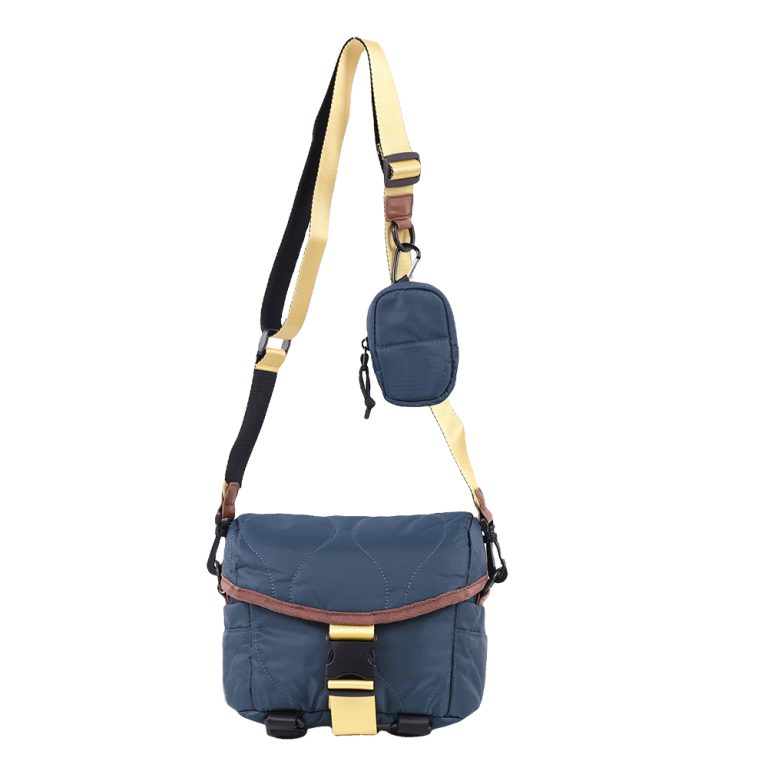
The framework is informed by sustained transactional practice and field validation: multiple product lines subjected to trade fair scrutiny at Photokina in Cologne and subsequent market surveillance, demonstrating that urban camera bag requirements frequently prioritize rapid access, protective compartmentalization and streetwise durability. To reflect that empirical posture and permit direct specification reference, consult the following exemplar product representation: urban camera bag. This procedural provenance aligns with peer-reviewed standards and industry testing protocols and supports defensible contract language and test matrices.
Common Pitfalls and Risk Mitigation
Avoid vague acceptances such as “meets commercial standards”—define the standard. Do not defer final color approval to post-production photography. Avoid single-supplier sole-source without redundancy clauses. Insist on clearly defined remedy schedules; do not accept indefinite lead times. Require objective metrics for subjective qualities: e.g., closure noise in dB, foam compression at set loads, and abrasion cycles to failure.

Implementation Checklist
Prepare: (1) Finalized technical specification with sample sign-offs; (2) Contract annexes for IP, tooling and warranties; (3) QA test plan with named laboratories and pass/fail criteria; (4) Logistics and insurance terms tied to milestones; (5) Audit rights and records retention. Assign a responsible project manager and an internal signatory with delegated authority to approve deviations; document any deviation with written change orders and associated cost and schedule impacts.
Concluding Synthesis
The legalistic framework presented here reduces interpretive gaps, allocates technical risk, and prescribes remedies that preserve brand integrity and consumer safety; it culminates in executable specifications and enforceable checkpoints that make production accountable. For organizations seeking disciplined execution of branded carry goods where utility and mark fidelity must coexist, the foregoing framework integrates specification rigor with operational controls observed by manufacturers and standards bodies, and aligns with the practical delivery capabilities of ChangRong.