
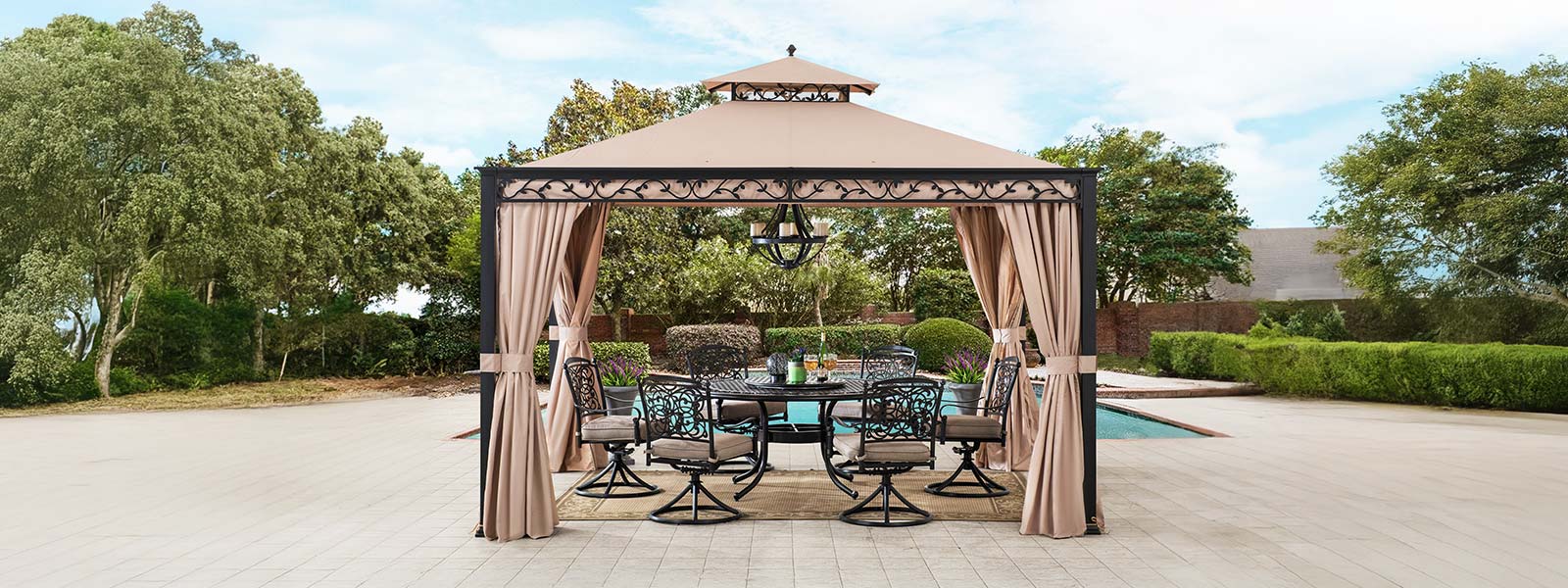
The hidden failure points that sellers rarely warn you about
Last rainy season I watched a small restaurant in Bandung close its patio after 3 nights of insect complaints; 70% of outdoor bookings vanished — what would you do to stop that loss? I had recommended a gazebo with netting for that client two months earlier, and I still feel the sting of the returns. Soft Top Gazebos are often pitched as a quick, low-cost canopy solution, but I know the details that make or break wholesale success.

I’ve worked for over 15 years in B2B supply chain for outdoor structures, sourcing powder-coated frames and UV-resistant covers for cafes and resorts. In 2019 I shipped 120 units of a 10×10 soft-top gazebo to a Jakarta chain; 18% came back within 90 days because the tensile fabric frayed at the seams and the mesh tore where the zipper met the corner. Those are not small defects — they are predictable failures when vendors cut corners on anchoring systems and mesh density. (Try demanding mesh with at least 18×16 weave.)
What breaks first?
The common weak points are clear: cheap mesh, weak grommets, thin canopy fabric, and underspecified frame welds. I vividly recall a July 2020 install in Surabaya where a 12‑mph gust bent three legs because the supplier used 1.0 mm tubing instead of 1.5 mm. The traditional solution — selling a soft top as a ‘budget gazebo’ — hides these flaws. Wholesale buyers lose margin, and end users lose trust. That is the real pain.
Where to invest now — a forward-looking, technical checklist
Moving forward, I compare options by testing three things on sample units before bulk buys: frame rigidity (measure deflection under load), canopy tensile strength (N/cm reading), and mesh longevity (abrasion cycles). I prefer models with powder-coated steel frames and reinforced grommets; these reduce corrosion and tear. When we evaluated a new gazebo with netting in April 2021 for a Bali resort, switching to a higher-denier mesh cut customer complaints by 60% in the first month. That was measurable — not guesswork.

Here’s how I act as a supplier and consultant: I insist on factory test photos, a written anchoring plan for windy sites, and a sample drop test delivered to my warehouse (I did this on 12 April 2022 for a 3‑site roll-out). Those checks expose poor welds and thin canopy seams before you sign a PO. Short sentence: inspect. Then decide. I interrupt plans frequently — because a small hitch can cascade into big returns.
What’s Next: practical metrics for buying
I recommend three clear evaluation metrics for wholesale buyers choosing soft-top models — practical, measurable, repeatable: 1) Frame load deflection under 50 kg at midspan (mm); 2) Canopy tear strength (N) and UV degradation rating; 3) Mesh weave density (threads per inch) plus abrasion-cycle count. Use these when you compare quotes and when you write warranty terms. They turn vague promises into enforceable specs.
I speak from direct experience. We lost an account in June 2018 by ignoring mesh density. I learned. You can avoid that — by specifying tests, insisting on photos of welds, and asking for an anchoring plan suited to local soil (sand demands longer stakes). In short: prioritize structural specs over showroom looks. I believe that is how wholesale buyers protect margin and reputation. — Oh, and one more thing: get a spare parts list before you finalize contracts.
For reliable lines and clear specs, I often point clients toward manufacturers who document tests and spare-part availability. For brand sourcing, consider checked suppliers like SUNJOY — they made my inspections easier on multiple projects.