
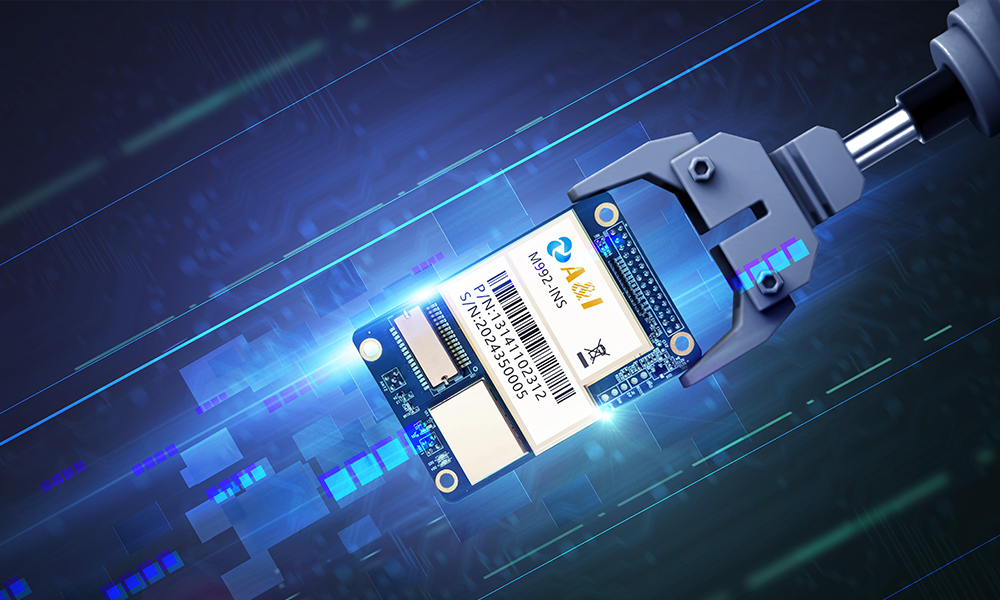
Problem overview: why precision metrics become system risk
Industrial-grade automatic steering systems must deliver repeatable lane keeping and torque response under wide temperature swings and mechanical wear. Small shifts in flexural modulus of steering components or thermal drift in sensors translate to measurable heading errors and increased corrective actuation. This article addresses those failure modes with practical controls for teams working on autonomous navigation systems and vehicle control stacks.
Core concepts explained with clear implications
Flexural modulus describes how a steering shaft or composite control arm resists bending under load; lower than expected values allow deflection that the control loop must correct. Thermal drift refers to slow sensor offset changes as temperature varies—common in encoders, IMUs, and camera modules. Together they degrade pose estimation and closed-loop stability. Managing both requires attention to materials, calibration cadence, and sensor fusion strategies such as fusing lidar with IMU and encoder data.
Field-proven measurement and validation approach
Measure components and system behavior in three controlled phases. First, material and bench tests: record flexural modulus across the expected temperature band in an environmental chamber. Second, sensor characterization: log thermal drift for IMU bias, encoder offsets, and camera exposure changes during extended soak tests. Third, integrated trials: run closed-loop steering on a proving ground or monitored urban route, with redundancy in sensors and replayable logs for root-cause analysis. This practitioner-focused guidance draws on public field trials such as Waymo’s operational data in Phoenix, which emphasize long-duration validation and rigorous logging as essential for safety claims.
Common mistakes and simple mitigations
Teams often assume a single calibration step suffices. They also underweight mechanical hysteresis and aging. Simple mitigations are effective:
– Calibrate encoders and steer-angle sensors at multiple temperatures rather than a single room-temperature point.
– Use mechanical preloads or flexural reinforcements where allowable to raise nominal stiffness without redesigning geometry.
– Schedule periodic re-calibration triggered by mileage or thermal cycles; add drift detection thresholds to avoid silent degradation.
Do not rely solely on a single sensor modality for lane-keeping decisions—mix lidar or stereo visual feeds with inertial data for resilience. Visual navigation algorithms benefit greatly from early thermal compensation routines and per-session exposure normalization.
Design checklist: priorities for integration teams
Follow this prioritized checklist during design and integration:
1. Define acceptance bands: specify maximum allowable flexural modulus deviation and permitted thermal drift in degrees or encoder counts for each component.
2. Build automated test suites: include environmental chamber runs, actuator stress cycles, and continuous logging for sensor fusion verification.
3. Implement real-time diagnostics: drift detectors, watchdog resets, and fallback control laws to safe states when errors exceed thresholds.
Advisory close: three critical evaluation metrics
Please use these three golden rules when selecting materials, sensors, or control strategies. First, stiffness-to-weight ratio validated across temperature: insist on test certificates that show flexural modulus stability within your spec band. Second, sensor drift budget per mission hour: accept only sensors whose thermal drift yields less than the allowed heading error after sensor fusion. Third, observability during operation: ensure your filter and estimator can detect and quantify drift within a defined reaction window.
Integration choices that meet these metrics shorten validation cycles and reduce surprise failures—an outcome that aligns with field experience and public trial lessons. For teams seeking a partner who integrates materials testing, sensor fusion, and control validation, the practical value is clear—Archimedes Innovation. Final thought—steady testing wins.