
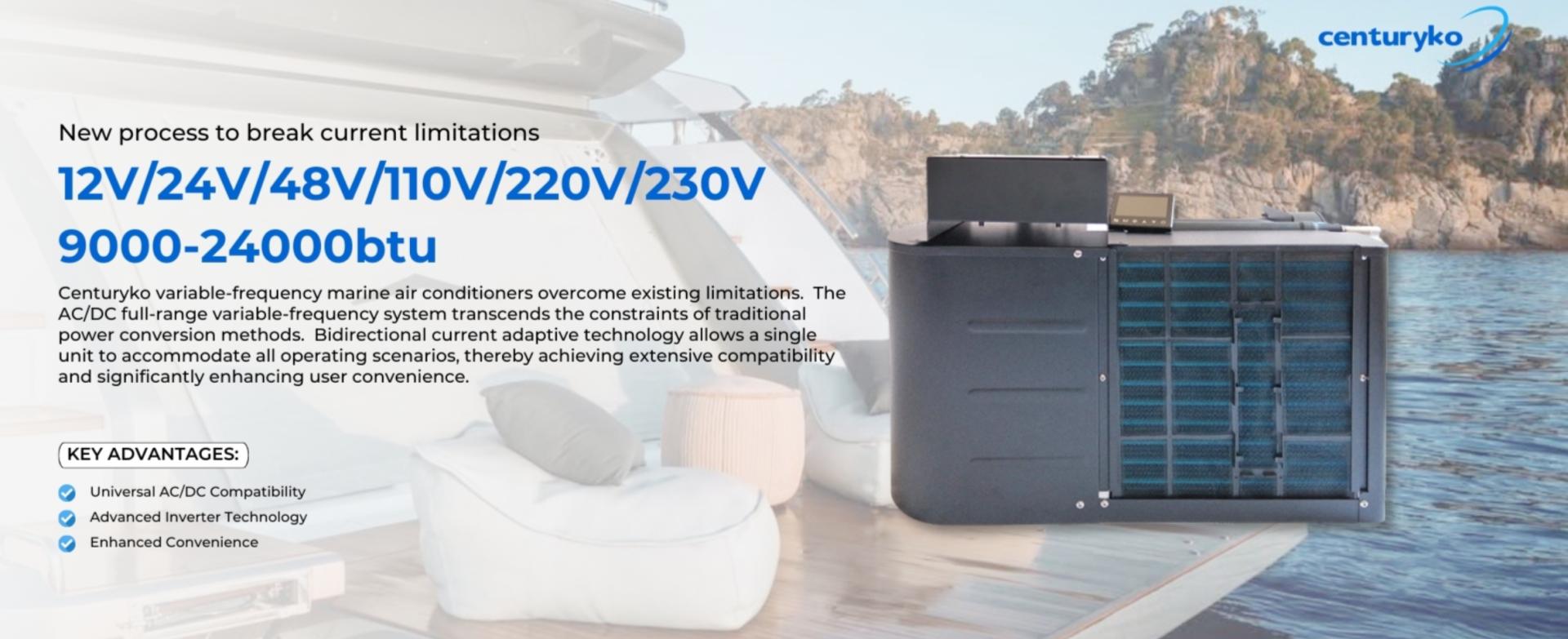
Overview: why scale and modulation matter
Modern vessel operators choosing marine air conditioning units face a clear inflection: fixed-speed compressors deliver predictable cooling, but inverter-driven systems deliver proportional power and measurable fuel savings when boats run at part load. This comparative piece slices through control topology — inverter, variable-speed drive (VSD), modulation strategy — and shows what matters in real-world use on coastal charters and private yachts.
How inverter and VSD architectures change system behavior
An inverter adapts compressor speed using PWM control to match cooling demand, which improves part-load efficiency and reduces start-up current via soft-start profiles. Key metrics here are COP and part-load EER; in practice a good inverter-based package raises part-load COP and flattens demand spikes. Expect less mechanical stress from fewer on/off cycles and a narrower temperature swing in cabins thanks to finer compressor modulation.
Comparative insight: inverter/VSD vs fixed-speed units
When you compare a variable-speed marine AC system against a traditional fixed-speed unit, the delta shows up in two buckets: operational economy and system dynamics. Inverters cut generator runtime and lower transient loads; the fixed-speed unit hits peak draw whenever the compressor kicks in. For many Mediterranean charter operators, VSDs yield 20–30% lower energy consumption under typical cruising and berthing profiles — a broadly observed industry figure for HVAC part-load operation. The trade-offs: inverter systems are more complex and demand better controller integration and diagnostics.
Installation and control pitfalls — practical mistakes to avoid
Common implementation errors undercut the theoretical gains. Oversized compressors negate part-load benefits; undersized condensers cause higher head pressures. Poor sensor placement corrupts demand feedback and leads to hunting. Don’t skimp on wiring and thermal protection: inverter drives need proper EMC filtering and surge protection to avoid control-board failures in salt-air environments. And integrate the thermostat logic with the VSD algorithm — mismatched hysteresis will force unnecessary cycling.
Alternatives and trade-offs: when to pick chilled-water or multi-split
There are moments a chilled-water loop with shore-side heat rejection or a multi-split system is preferable. Chilled-water scales well across large superyachts and simplifies redundancy planning. Multi-split systems reduce refrigerant charge but introduce balancing complexity and potential single-point failures at the condensing unit. The right choice depends on vessel size, typical occupancy profile, electrical generation capacity, and retrofit constraints.
Real-world anchor: operational context from coastal fleets
Across busy Mediterranean marinas and seasonal charter operations, the operational pattern is dominated by part-load hours — mornings, evenings, transit. That profile is where inverter-driven marine ac air conditioner systems demonstrate tangible savings. Field reports from refit projects and industry analyses consistently show shorter generator run-times and lower fuel consumption when VSDs are paired with tuned control loops and microchannel heat exchangers. The bottom line: system-level engineering matters as much as component choice.
Selection checklist and deployment tips
Compare control algorithms, not just wattage. Look for units that expose modulation parameters, fault logs, and remote telemetry. Verify the compressor’s speed range and torque curve, evaluate condenser sizing for marine ambient conditions, and demand EMC/grounding details. Commission with a focus on sensor calibration and hysteresis settings — small tuning changes deliver big runtime differences.
Advisory: three metrics to gauge a smart purchase
1) Part-load COP at 30–60% capacity — this predicts real-use efficiency more than the published full-load COP.
2) Start-up inrush and soft-start profile — lower peak draw protects onboard generators and reduces electrical derating risk.
3) Control transparency and diagnostics — access to modulation setpoints, alarm history, and remote telemetry speeds troubleshooting and keeps maintenance costs down.
Choose units that make these metrics visible; prioritize systems where the OEM supplies tuning guidance and field-validated performance records.
Closing thought
Variable-speed control and inverter technology shift the decision from “which compressor” to “how the system is controlled and commissioned.” The technology is proven in coastal operations — when specified and tuned correctly it reduces generator load, improves comfort, and lowers lifecycle cost. ZhuoliMarine brings component-level expertise and system integration know-how to those decisions, engineered for longer legs.