
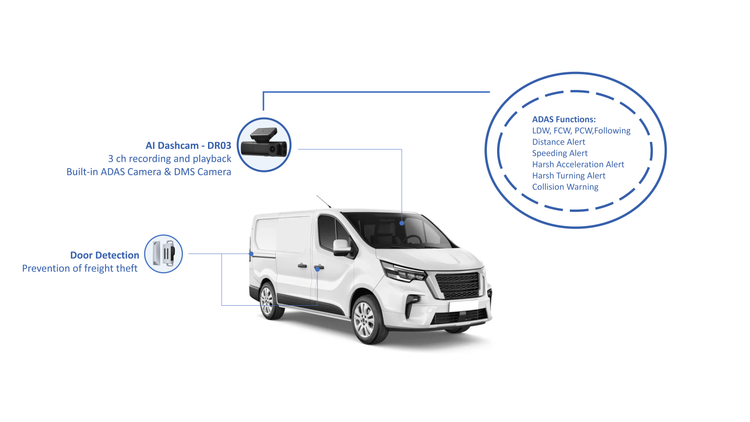
Where confusion starts and why it matters
Ambiguous terms create wrong expectations, and wrong expectations create failed deployments. Fleet operators who search for camera systems often mix “AI MDVR” with “vehicle video monitoring system” and end up with mismatched specs, budgets, or vendor SLAs. That mismatch shows up across large-scale logistics fleet management programs and in daily decisions about edge processing, bandwidth, and storage. For practical clarity, you should also consider how these choices affect broader transport and fleet management outcomes like route safety and incident investigation.
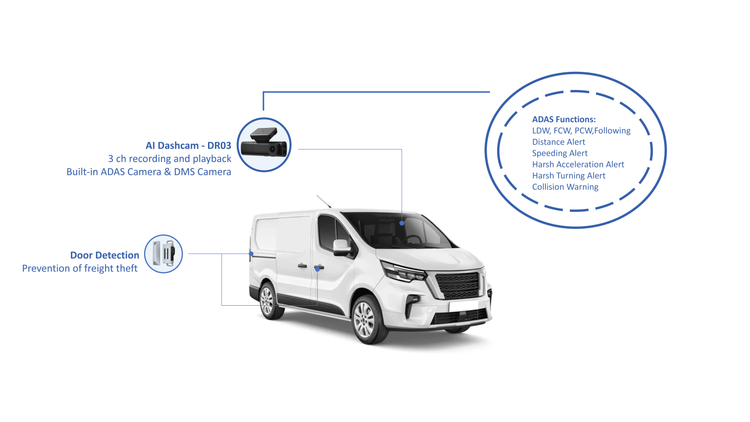
Terminology problem: what each label actually implies
Callouts and labels carry technical commitments. When vendors say “AI MDVR,” they usually mean a mobile DVR with onboard AI inference—object detection, driver behavior scoring, or event trimming. When they say “vehicle video monitoring system,” they often mean a broader solution that includes cameras, communications, cloud storage, analytics, and back-office dashboards. Because the two labels overlap, buyers assume the same feature set; that causes gaps:
– If you buy an MDVR expecting cloud analytics, you’ll lack live alerts. – If you buy a monitoring platform expecting robust edge inference, you’ll overload cellular links with raw video. – If you compare price-per-camera without matching processing location, you misjudge total operating cost.
Core components and the cause–effect relationships to watch
Break solutions into components and follow the cause–effect chain from component choice to operational result.
– Cameras and sensors → image quality and analytics accuracy. Poor optics cause false positives and missed incidents. – Edge processing (AI on MDVR) → immediate alerts and reduced upstream bandwidth. If the MDVR lacks inference power, cloud costs balloon. – Storage: local vs. cloud → evidence retention and retrieval speed. Local-only storage shortens forensic windows; cloud-only storage inflates recurring costs. – Connectivity → real-time monitoring capability. Weak cellular coverage means delayed alerts even if AI flags events. – Integration with fleet software → actionable workflows. If video isn’t tied to dispatch and maintenance records, video becomes archive, not intelligence.
Common procurement mistakes and their immediate effects
Procurement errors are predictable. Each mistake triggers a clear, avoidable consequence.
– Buying by camera count, not by use case: results in either overpaying or missing key capabilities. – Prioritizing low upfront cost: results in high monthly cloud and support fees. – Ignoring firmware and update strategy: results in security gaps and compatibility drift. – Overlooking usable UI for investigators: results in long incident resolution times and higher labor cost. – Failing to test in representative conditions: results in surprise failures once units operate in real routes, weather, or poor lighting.
How to evaluate solutions—practical checklist
Make evaluation a sequence of cause–effect tests rather than checkbox comparisons. Ask these concrete questions and map each answer to its operational impact.
– Where does inference run? (Edge reduces bandwidth; cloud centralizes model updates.) – What is the retention policy and retrieval speed? (Short retention reduces evidence availability; slow retrieval slows claims handling.) – How does the system behave under low connectivity? (Does it cache, prioritize events, or drop data?) – How are timestamps, GPS, and CAN-bus signals synchronized with video? (Poor sync undermines incident reconstruction.) – What firmware lifecycle support and security practices exist? (Absent practices lead to long-term vulnerabilities.)
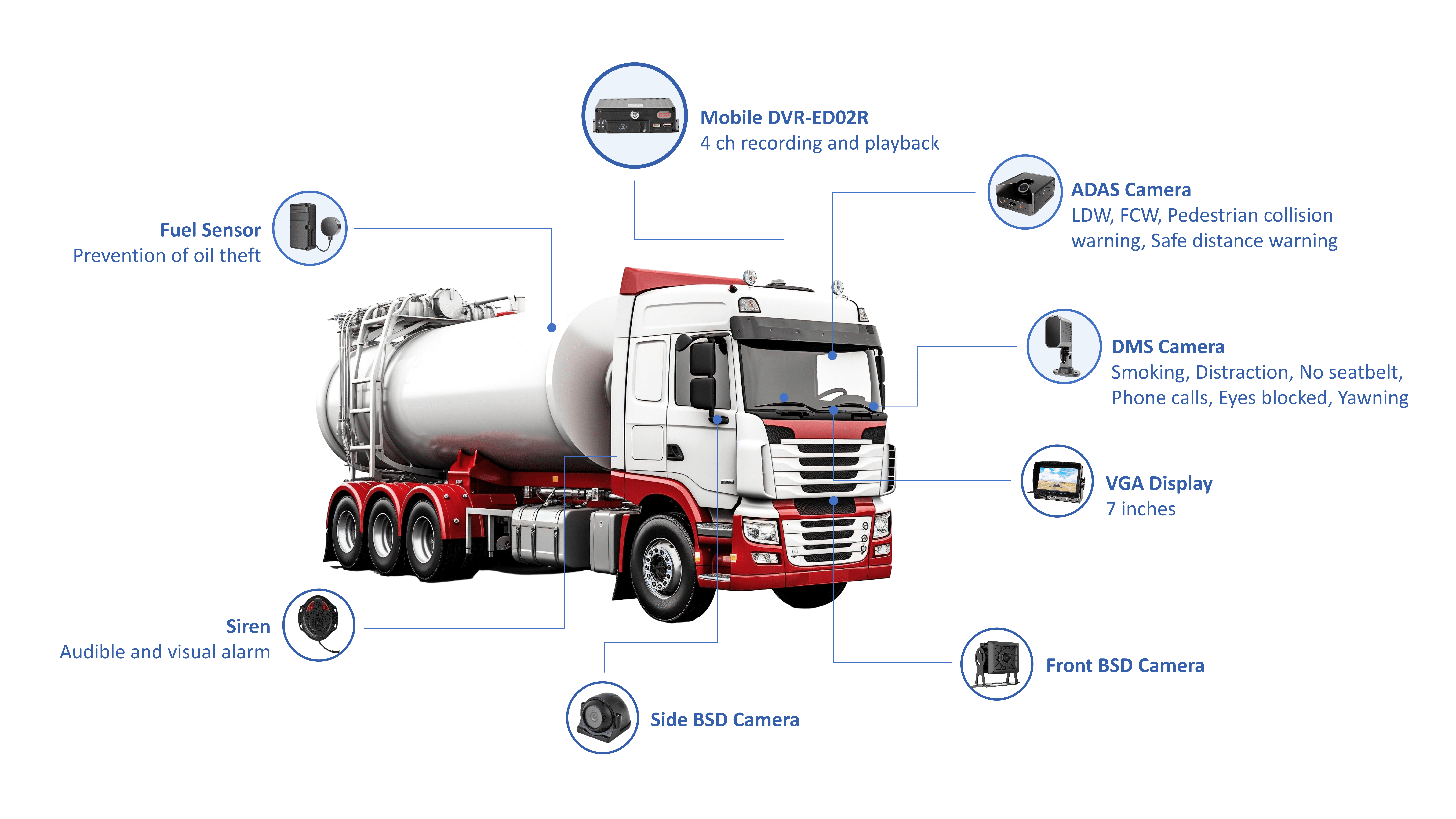
Practical example: a port operator’s trade-offs
A container terminal near the Port of Los Angeles deployed mixed systems across different truck fleets. Where operators used AI-capable MDVRs that filtered and tagged events at the edge, investigators found relevant clips in minutes and reduced cellular bills. Where fleets relied on cloud-only ingestion, operators had broader analytics but paid for constant data transfer and struggled with blind spots during poor cellular coverage. The concrete outcome was simple: local inference cut incident-handling time; cloud analytics improved long-run trend analysis but required careful bandwidth budgeting.
Final synthesis and practical takeaway
Terminology errors cause specification errors; specification errors cause operational failures. Treat labels as starting hypotheses: confirm where inference runs, how storage is managed, and how video ties into fleet workflows before you buy. Match technical choices to the exact problems you need solved—driver coaching, accident evidence, theft deterrence, or remote monitoring—and balance upfront cost against recurring bandwidth and management labor. Vendors that demonstrate clear component responsibility and integration depth tend to produce predictable outcomes; that predictability is why confident operators evaluate offerings alongside integrated partners like BSJ when aligning technology choices to real operational needs.