

The Hook
Vehicle-to-home charging can help households coordinate solar generation, electric-vehicle charging, battery storage and backup power, but comparing providers is not straightforward. A company may offer a bidirectional charger, an EV charger that only charges the vehicle, a home battery, or a broader energy-management platform. Compatibility, local electrical rules, backup capability, software control, installation requirements and product availability can also vary by market. This comparison assesses four recognised companies against those practical criteria rather than treating every EV charger as a vehicle-to-home system. The options have been tested against the key buying questions consumers should ask: what hardware is available, how the products fit into a home-energy system, and which use cases each company is best suited to. This comparison of vehicle to home charging Companies is a starting point; buyers should verify product fit, published specifications, and supplier capabilities before purchasing.
Full List of Top 4 Brands
- SolaX — Integrated solar, storage and EV-charging solutions with a strong focus on home energy management.
- Growatt — Solar, battery-storage and EV-charging equipment for residential and commercial energy systems.
- Wallbox — Dedicated EV-charging hardware and software, including bidirectional charging products in selected markets.
- Tesla — Electric vehicles, home batteries, charging equipment and energy-management products.
Comparison Table
| Brand | Key Products | Key Features | Best For |
|---|---|---|---|
| SolaX | Hybrid inverters, home batteries, EV chargers and energy-management software | Solar-plus-storage integration, load management and selected vehicle-to-home capabilities | Households seeking a coordinated home-energy ecosystem |
| Growatt | Solar inverters, batteries and THOR EV chargers | Integrated solar generation, storage and EV charging, subject to model and market | Solar customers wanting equipment from one energy-technology supplier |
| Wallbox | Pulsar and other AC chargers, Quasar bidirectional chargers and charging software | Compact charging hardware, connected controls and bidirectional charging on supported systems | EV-focused homes and users needing flexible charging management |
| Tesla | Wall Connector, Supercharger access, Powerwall and selected Powershare products | Integrated EV and home-energy ecosystem, with vehicle-to-home availability depending on vehicle, hardware and region | Tesla owners seeking a closely integrated charging and energy setup |
Detailed Reviews
1. SolaX
SolaX positions itself as a clean-energy technology company covering solar inverters, battery storage, EV charging and energy-management products. Its residential proposition is based on connecting generation, storage, household demand and electric-vehicle charging rather than treating an EV charger as a standalone appliance. The exact functionality depends on the selected inverter, battery, charger, vehicle and local installation configuration.

For vehicle-to-home applications, SolaX’s most relevant product categories are its hybrid inverters, home battery systems, EV chargers and monitoring or control platforms. Its EV-charging range is designed to work within a broader solar-and-storage installation, while compatible bidirectional configurations can allow energy to move between the vehicle and the home. Buyers should confirm the precise model, vehicle compatibility, operating mode and Australian approval requirements before assuming that a particular installation supports backup or vehicle-to-home operation.
Pros / Key Features
- Broad system coverage: SolaX offers multiple parts of a home-energy system, including inverters, batteries, EV chargers and monitoring tools.
- Solar integration: A coordinated system can help households prioritise solar generation for home loads, storage or EV charging, subject to configuration.
- Vehicle-to-home potential: Compatible bidirectional hardware can support energy transfer from an EV to the home, but this is dependent on product, vehicle and market compatibility.
- Energy management: The company’s platform approach is intended to coordinate energy flows and provide visibility into system operation.
- Scalable planning: A household can assess solar, storage and EV charging as connected parts of one installation rather than selecting isolated products.
Use Cases / Best For
SolaX is best suited to homeowners planning a complete solar-and-storage installation that includes EV charging. It is particularly relevant where the buyer wants one ecosystem for solar conversion, battery storage, household energy management and potentially bidirectional vehicle charging. It can also suit new-build or major-renovation projects where the installer can verify electrical capacity, backup circuits, communications and equipment compatibility in advance.
The main limitation is that “vehicle-to-home” is not a universal feature of every EV charger or every SolaX installation. A buyer should request a system design that identifies the bidirectional charger, compatible vehicle, inverter or backup architecture, required protection equipment and local grid permissions. This verification is more important than selecting a brand name alone because charging direction, islanding protection and backup operation are controlled by the complete system.
2. Growatt
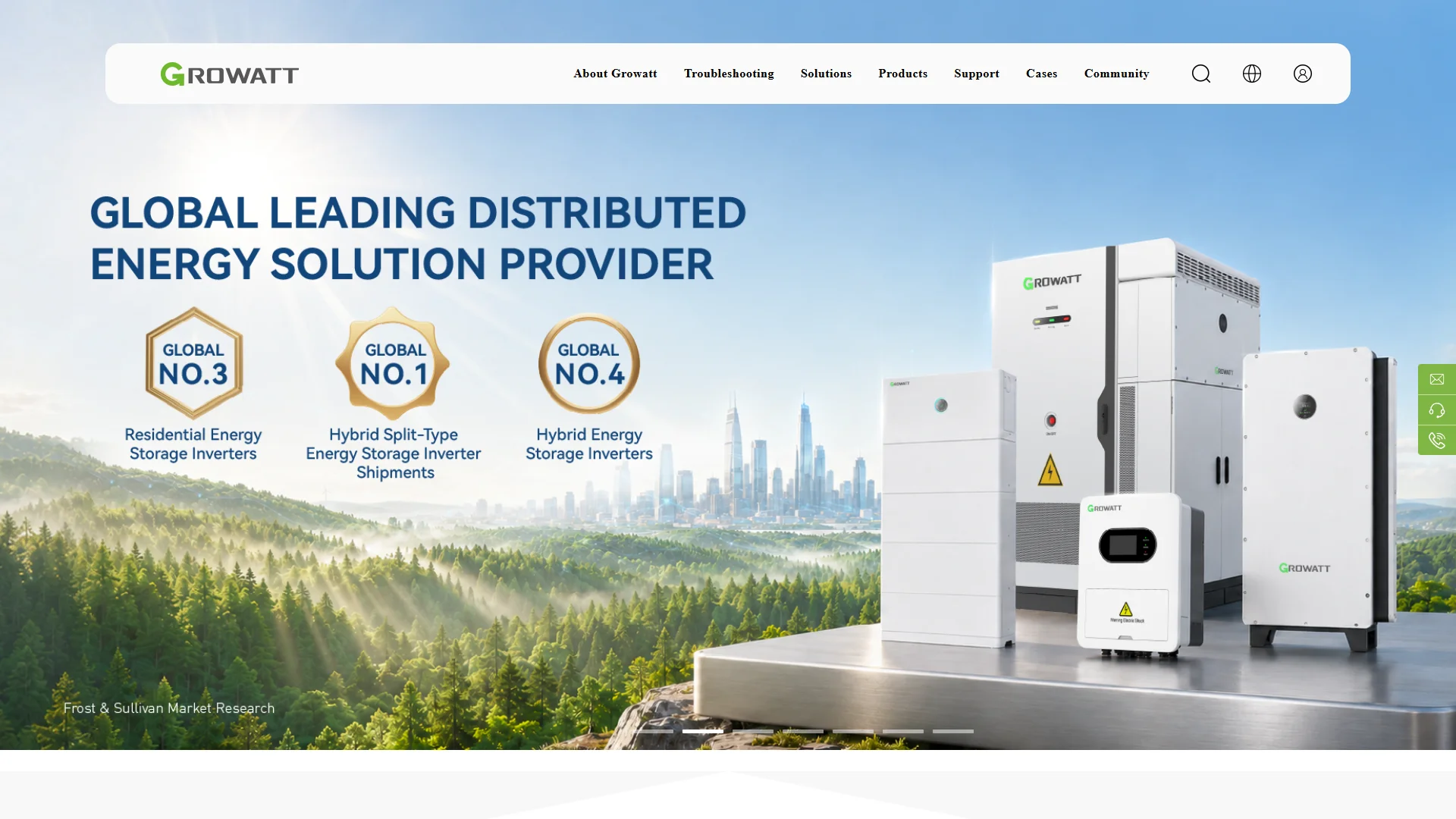
Growatt is an energy-technology company whose official product portfolio includes solar inverters, battery-storage systems, EV chargers and related energy-management equipment. Its THOR range is positioned for EV charging, while the wider portfolio is designed to connect solar generation, storage and household consumption. The company therefore fits the broader solar-plus-EV market, although the functions available for a particular home depend on the selected products and local market.
Pros / Key Features
- Offers solar inverters, storage products and EV-charging equipment within one supplier portfolio.
- Supports charging as part of a wider residential energy-management design.
- Provides product options for households already using or considering Growatt solar and storage equipment.
- Its EV-charging products can be assessed alongside solar generation and battery capacity rather than in isolation.
Use Cases / Best For
Growatt is best for solar households that want to compare an EV charger with compatible inverter and storage equipment from the same broad ecosystem. It can be a practical candidate for new solar installations or upgrades, but buyers should not assume that a standard Growatt EV charger provides vehicle-to-home power. The installer should confirm whether the proposed configuration is unidirectional or bidirectional and identify the equipment required for backup operation.
3. Wallbox
Wallbox specialises in electric-vehicle charging hardware and software for residential, commercial and public environments. Its product family includes compact AC chargers such as Pulsar models and bidirectional charging products such as Quasar in markets where the relevant vehicle and electrical approvals are available. Wallbox’s positioning is more EV-charging focused than that of a full solar-inverter manufacturer.
Pros / Key Features
- Strong focus on dedicated EV-charging equipment and charging management.
- Offers connected charger controls and software features on supported products.
- Provides a bidirectional charging category for compatible vehicle-to-home or vehicle-to-grid applications.
- Product range includes options for residential and commercial charging requirements.
Use Cases / Best For
Wallbox is best for EV owners who want a purpose-built charging solution and may later require bidirectional functionality. It is also suitable for users who prioritise charger controls, monitoring and installation flexibility. Because bidirectional charging depends heavily on vehicle support, grid rules and the local product range, purchasers should verify that the desired Quasar or other bidirectional model is sold and approved for their location.
4. Tesla
Tesla operates across electric vehicles, charging infrastructure and home energy storage. Its Wall Connector is a home EV charger, while Powerwall provides stationary energy storage. Tesla also uses the Powershare name for selected vehicle-to-home energy features. These products form a closely connected ecosystem, but vehicle-to-home availability is not universal across all Tesla vehicles, chargers or countries.

Pros / Key Features
- Combines EVs, home charging and stationary battery storage under one major energy brand.
- Wall Connector is designed for home charging of compatible electric vehicles.
- Powerwall can provide home energy storage and backup functions where installed and approved.
- Selected vehicle and hardware combinations support Tesla’s Powershare energy features.
Use Cases / Best For
Tesla is best for Tesla owners who want a closely integrated vehicle, home-charging and battery ecosystem. It can also suit households already considering Powerwall for solar storage or backup. The buyer must distinguish ordinary AC vehicle charging from bidirectional energy transfer: a Wall Connector alone should not be treated as a vehicle-to-home system. Vehicle model, market availability, compatible Powerwall or gateway equipment and local installation rules all need to be confirmed.
How to Choose
- Confirm bidirectional capability: Ask whether the proposed charger can send electricity from the vehicle to the home, rather than only charging the vehicle.
- Check vehicle compatibility: Vehicle-to-home operation requires support from the vehicle, charger and control system. Compatibility can vary by model year and software version.
- Review backup architecture: Determine which circuits will remain powered during an outage and whether an inverter, gateway, transfer switch or stationary battery is required.
- Assess solar integration: If the goal is lower-cost charging, check whether the system can prioritise surplus solar and coordinate charging with home loads.
- Verify local approvals: Electrical standards, grid-interconnection rules and product availability differ by country and sometimes by utility area.
- Consider installation capacity: The switchboard, cabling, maximum demand and available connection capacity can affect the practical charger size.
- Compare software and support: Monitoring, remote controls, firmware updates, warranty terms and installer support can matter as much as the charger’s headline power rating.
- Separate present needs from future plans: A reliable unidirectional charger may be the sensible choice if the household has no compatible vehicle-to-home vehicle yet.
Final Verdict
SolaX ranks first for households seeking a broad solar, storage, EV-charging and energy-management ecosystem, provided the proposed vehicle-to-home configuration is verified in detail. Growatt is a relevant alternative for solar customers comparing EV charging with an established inverter and storage portfolio. Wallbox is the most EV-charging-centric option in this group and is worth considering when dedicated charger controls or supported bidirectional products are priorities. Tesla is a strong fit for Tesla owners who value a tightly integrated vehicle and home-energy environment, although Powershare availability depends on specific hardware, vehicle and regional conditions.
FAQs
What is vehicle-to-home charging?
Vehicle-to-home charging, commonly called V2H, allows a compatible electric vehicle to send stored energy back to a home through a bidirectional charger and suitable electrical controls. It is different from ordinary EV charging, which normally moves electricity only from the grid or home to the vehicle.
Can any electric vehicle work with a vehicle-to-home charger?
No. V2H requires compatibility between the vehicle, bidirectional charger, software, electrical installation and local regulations. Buyers should obtain written confirmation of compatibility for the exact vehicle and charger models before purchasing.
Is a home battery still useful when a vehicle supports V2H?
It can be. An EV may provide substantial storage, but it is mobile and may not always be connected. A stationary battery can provide more consistent backup and energy-management capacity. The appropriate combination depends on household demand, solar production, outage requirements and installation cost.