
Introduction — What a fume collector actually does
I want to start by breaking down what we mean when we talk about a fume collector: a device designed to capture, filter, and remove airborne contaminants at their source. In many facilities, fume extraction products sit behind a workbench or above a printer and quietly do the heavy lifting—removing VOCs, particulate matter, and odors before they spread. (Think of it as targeted airflow plus filtration.) Recent site surveys show localized concentrations can exceed recommended exposure limits by 2–5x in small shops—so the stakes are real. How do these systems actually work, and why do some succeed while others underperform? Let’s move from the core concept to the common pitfalls engineers and technicians face next.
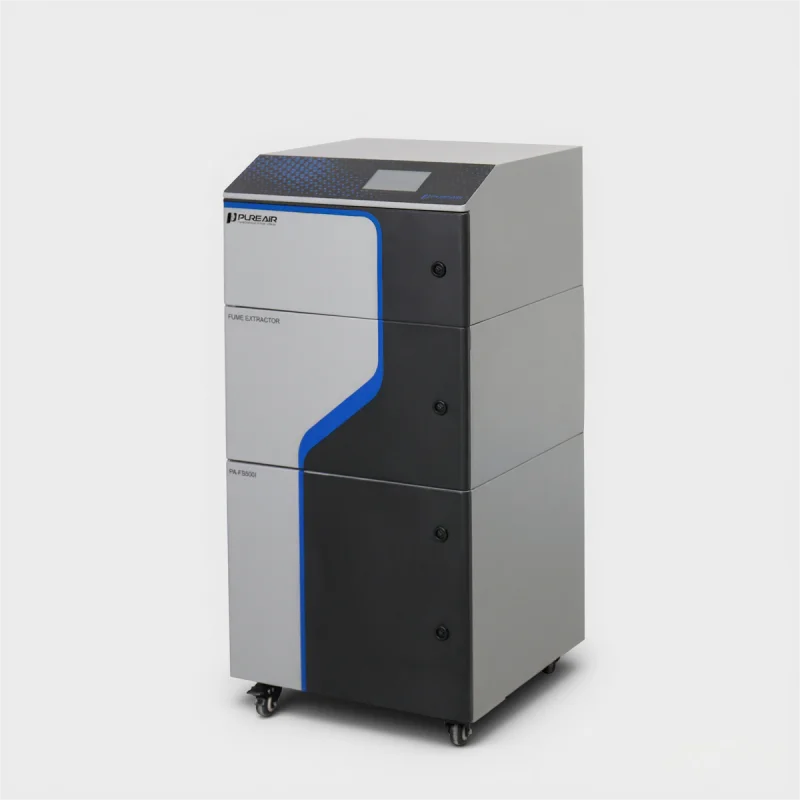
Why standard systems often fail
fume collectors promise clear air, but I’ll be blunt: many installed systems don’t meet expectations. They either undersize the fan, ignore capture velocity at the nozzle, or route fumes through inefficient ductwork. The result is stubborn fumes, worker complaints, and wasted maintenance budgets. I’ve seen units with adequate HEPA filters but poor airflow because fan static pressure wasn’t accounted for — frustrating and avoidable.
Why do common fixes miss the mark?
Look, it’s simpler than you think. Teams often pick equipment by filter rating alone, assuming a high-MERV or HEPA-grade element solves everything. It doesn’t. Filter media like activated carbon will remove odors and VOCs, but if the capture point is wrong or the extraction arm is ill-positioned, contaminated air never reaches the filter. Add long duct runs and sharp bends, and the airflow drops. We end up chasing symptoms — clogged filters, noise complaints, and uneven capture — instead of fixing system balance. That’s where proper sizing, capture velocity calculations, and attention to fan performance matter most.
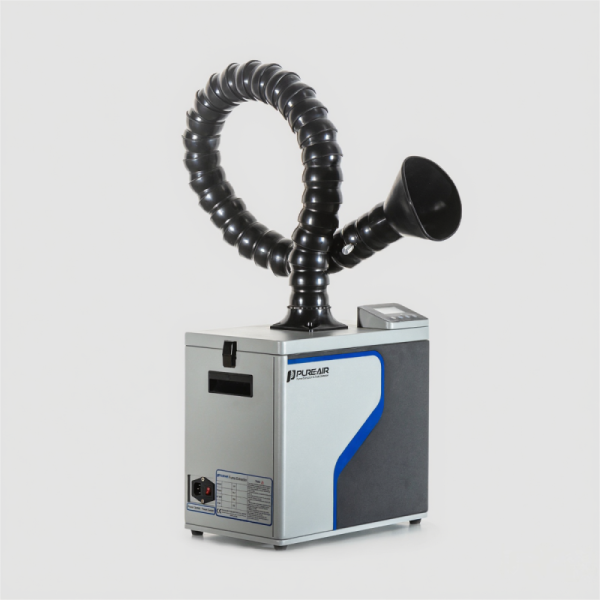
New principles for better extraction — what to build next
Looking forward, I suggest shifting from “bigger filter” thinking to a systems approach: match capture geometry, fan curves, and filtration class to the actual process. Modern designs use modular capture hoods, variable-speed drives, and sensor feedback to keep capture velocity steady as conditions change. When we plan around those elements — capture point, airflow, and filter selection — we avoid overspending on unnecessary media and reduce energy use. I’m convinced this is the smarter path.
Real-world impact — what you can expect
In pilot projects, swapping a mismatched unit for a tuned system reduced particulate counts by over 70% and cut energy consumption almost 30% — measurable wins. Adopting active monitoring (simple pressure sensors or airflow meters) prevents surprises and extends filter life. It also brings quieter operation — which matters; comfort affects compliance. — funny how that works, right? If you’re evaluating options, prioritize capture effectiveness, not just filter grade. For practical buys, consider modular fume collectors that let you tune airflow and filtration independently.
To wrap up: I’ve seen the problems, and I’ve seen how small design shifts make a big difference. Evaluate systems by three core metrics — capture velocity at the source, matched fan static pressure, and filter selection aligned to contaminants — and you’ll avoid the usual traps. We prefer solutions that are measurable, serviceable, and quiet. If you want a practical partner on this, check what PURE-AIR is doing; they build systems with those principles in mind.