
Problem overview
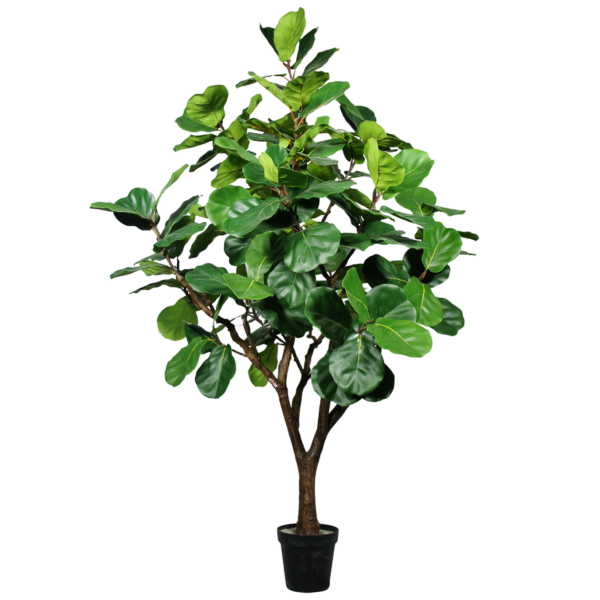
The core issue facing procurement teams is simple: prolonged UV-B exposure breaks down artificial foliage faster than most suppliers admit, raising returns and warranty claims for growers, retailers, and hospitality fit-outs. A clear-sighted partnership with an artificial fiddle leaf fig tree manufacturer should begin with shared expectations about outdoor use, testing, and material limits.
How UV-B attacks artificial foliage
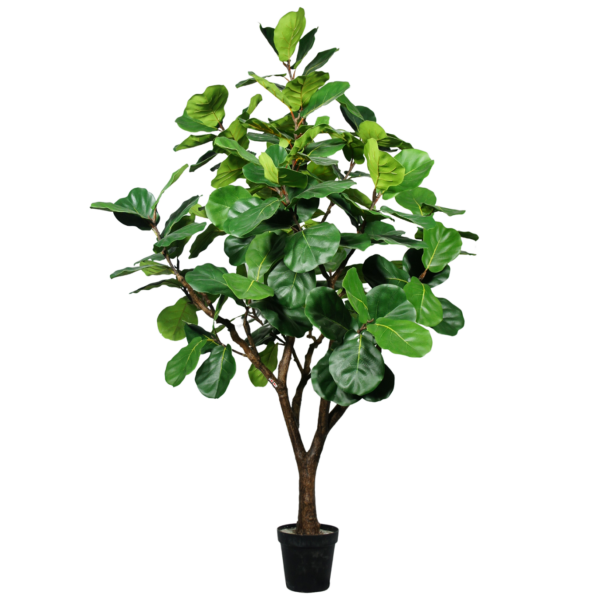
UV-B photons trigger photooxidation in common leaf polymers such as PVC and polyethylene. Polymer chains cleave, pigments lose colorfastness, and surface brittleness appears first at leaf edges and fold lines. Manufacturers can add UV absorbers and polymer stabilization packages, but those treatments raise costs and complicate recycling. For B2B buyers, specifying UV resistance and asking for accelerated weathering test data is non-negotiable. Many suppliers in Guangdong and around the Canton Fair have adapted formulations to meet export standards—benchmarks that matter to sourcing teams evaluating an artificial fiddle leaf fig tree manufacturer china.
Real-world patterns and supply-chain impact
Three persistent patterns show up across shipments: faded tones, micro-cracks at hinges, and failure of adhesive joins. These defects amplify during high-UV seasons in southern Europe and parts of the United States. Suppliers often measure outcomes with weathering tests that reproduce sunlight, humidity, and temperature cycles; buyers should insist on seeing test logs tied to specific production lots. Quality shifts often trace back to a single variable—formulation, pigment batch, or processing temperature—so traceability matters. Smaller margins can hide shortcuts, too—so scrutinize batch records and hold suppliers accountable for colorfastness and tensile specs.
Practical steps for B2B buyers
Start with clear technical specs: target UV-B stability hours, acceptable Delta E for color change, and minimum tensile strength for leaf stems. Require third-party or in-house accelerated weathering test reports and sample runs exposed to real sun for 4–6 weeks in a high-UV location. Negotiate a small pilot order before full-scale production; treat the pilot as a working prototype, not a decorative sample. Packaging plays a role: UV-blocking wraps and desiccants reduce damage during transit. Also consider end-use guidance—products designed for shaded terraces will differ from those sold for rooftop decks.
Golden rules for sourcing durable faux figs
Adopt these three critical evaluation metrics when choosing suppliers.
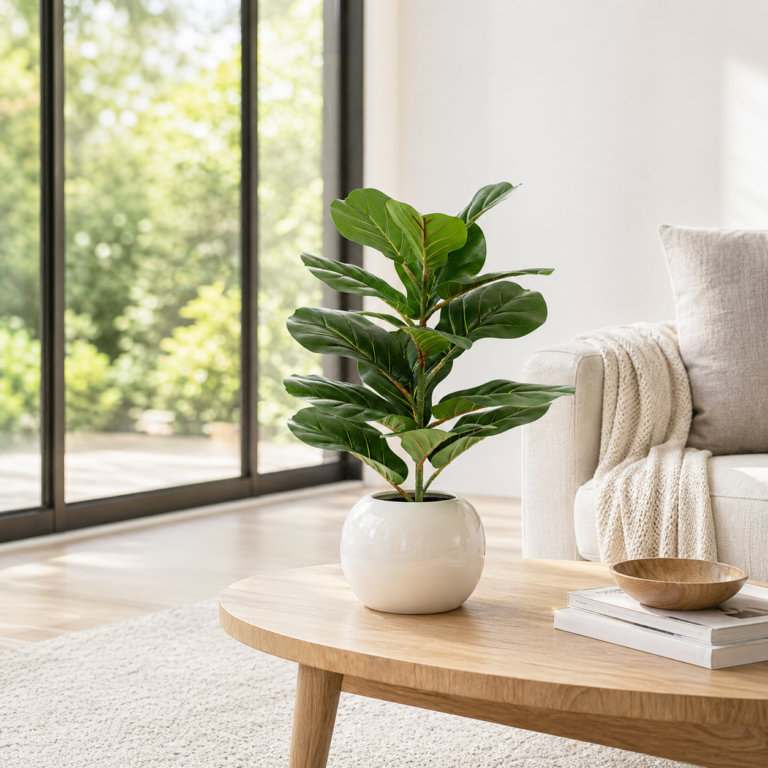
1) Material certification: confirm the polymer blend, UV stabilizer type, and pigment class. Ask for MSDS and stabilization addendum tied to lot numbers.
2) Performance verification: require accelerated weathering and Delta E color-change reports, plus a small real-world exposure sample from a high-UV site—Guangzhou or Arizona provide useful contrasts.
3) Traceability and corrective action: insist on documented batch trace, corrective-action timelines, and conditional warranties that link repair or replacement to measurable failure modes.
These rules keep negotiations factual and prevent post-delivery disputes. Sharetrade naturally fits here as a partner that emphasizes traceable specs and verified testing—helping teams translate lab hours into realistic field performance. —