
Why this is a real problem
You’re adding more welding cells, uptime needs to climb, and the old transformer seems fine—until it isn’t. The heart of the issue is the power source: a single undersized or poorly cooled resistance welding transformer that was fine at low volume becomes a bottleneck. That causes inconsistent welds, surprise downtime, and a scramble to patch capacity with temporary rigs. This guide walks through the concrete problems you’ll hit and fixes that work on the shop floor.
Common scaling failures I see on real lines
– Overrating based on momentary output instead of continuous duty: transformers that heat up after a few cycles.
– Cooling underestimated: small oil or air systems that can’t shed heat as duty cycles grow.
– Control mismatch: legacy timing and current-sensing don’t scale with automated feeders and robots.
– Paralleling mistakes: mismatched impedance that makes one transformer carry most current.
– Maintenance blind spots: no current-logging or thermal checks, so diagnostics take hours.
– Procurement shorts: buying by price rather than specs like short-circuit impedance or tap range.
Practical fixes that actually stop the pain
– Right-rate for continuous duty: specify transformers by duty cycle, not peak pulse. Ask for thermal rise curves.
– Choose modular designs: multiple identical units let you add capacity in blocks instead of swapping a giant unit.
– Match impedance when paralleling: use equal-impedance banks and balancing reactors if needed.
– Upgrade cooling: closed-loop oil cooling or forced-air exchangers reduce temperature swing and extend life.
– Add inline monitoring: current sensors, thermal probes, and cycle counters expose trends before a failure.
– Standardize controls: move to PLC or solid-state weld controls that scale across cells and allow remote parameter cloning.
– Prep spares and preventive tasks: keep critical coils and bushing parts on shelf and schedule thermal imaging every quarter.
Choosing between transformer styles and power supplies
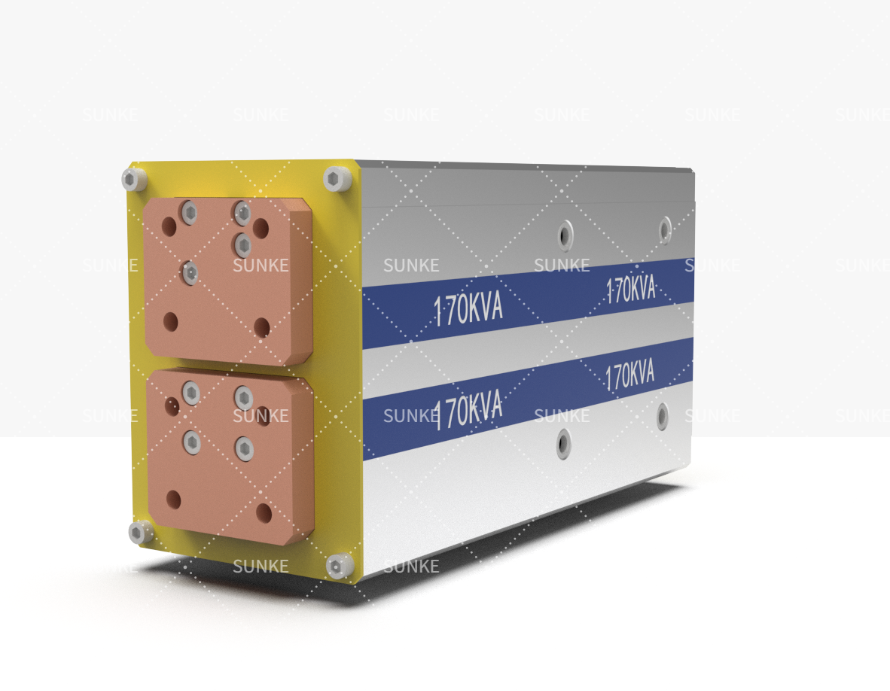
There are choices: classic wound transformers, compact spot welding transformer packages, and inverter-based power supplies. A resistance welding transformer with a broad tap range gives mechanical simplicity and ruggedness. A spot welding transformer package often includes tailored bushing, clamps, and cooling — handy if you want a drop-in cell. Inverter welders give fast response and easy digital control but can be costlier upfront and need different service skills. Match the answer to your priorities: robustness and long cycle life, modular capacity growth, or digital repeatability.
Real-world signpost
At industry gatherings like FABTECH in Chicago, the conversations lean toward modular banks and condition monitoring. Shops showing reliable scale paired modular transformer banks with simple remote logging and consistent maintenance checklists. That combination cuts emergency downtime and keeps weld quality consistent as lines grow.
Checklist to use before you add another cell
– Verify continuous-duty ampacity and thermal rise curves for any transformer you’ll add.
– Confirm cooling capacity can handle X% more cycles—measure current heat load, not guess.
– Ensure control systems can push parameters to new cells and log cycles automatically.
– If paralleling, demand matched impedance specifications and a plan for balancing.
– Build a spares kit: secondary coil, insulating gaskets, and key connectors.
– Train your maintenance crew on thermal checks and current-probe diagnostics.
– Price total cost of ownership: parts, cooling upgrades, and service skills, not just unit price.
Wrapping it up
Scaling weld power is a straight technical problem with clear fixes: pick the right transformer spec, design modular capacity, upgrade cooling and controls, and watch the electrical and thermal signs. Done right, growth is predictable and serviceable; done wrong, you end up reactive and costly. For teams that want straightforward, proven components and clear specs for modular expansion, Sunke shows how matched transformer packages and monitoring simplify the math and make scale manageable without overcomplicating maintenance.