
Introduction: framing the comparison
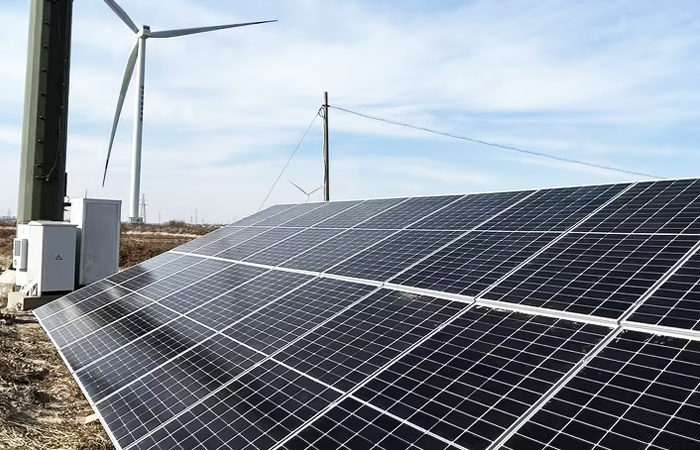
This comparative analysis examines energy management system (EMS) protocols for remote telemetry within custom solar-hybrid inverter architectures, with emphasis on operational reliability and data fidelity. The discussion anchors on real resilience needs observed during the 2020 California wildfires, when distributed generation and storage were required to sustain critical loads. Early in deployment, many integrators paired bespoke firmware with standard telemetry stacks and off-the-shelf solar battery storage, producing mixed results; this review assesses why certain protocol choices perform better under load, latency, and degraded-communications scenarios. Key evaluation vectors include telemetry granularity, command latency, and interoperability with inverter and battery subsystems.
Protocol comparison: lightweight vs. feature-rich
Two families of protocols dominate remote telemetry for inverters: lightweight publish/subscribe protocols (exemplified by MQTT) and richer, session-oriented APIs (such as OPC UA or REST over HTTPS). MQTT excels when bandwidth is constrained and message overhead must be minimal; it permits efficient telemetry of metrics like voltage, current, and state of charge (SoC). Conversely, RESTful APIs and OPC UA provide stronger typing, richer metadata and easier compatibility with enterprise monitoring platforms. The trade-off is clear: MQTT reduces packet size and conserves power on constrained controllers, while richer APIs simplify schema evolution and diagnostic traceability. For inverters that must present fine-grained event logs to a supervisory EMS, the latter often reduces integration time despite higher resource demands.

Interfacing with battery chemistries and BMS
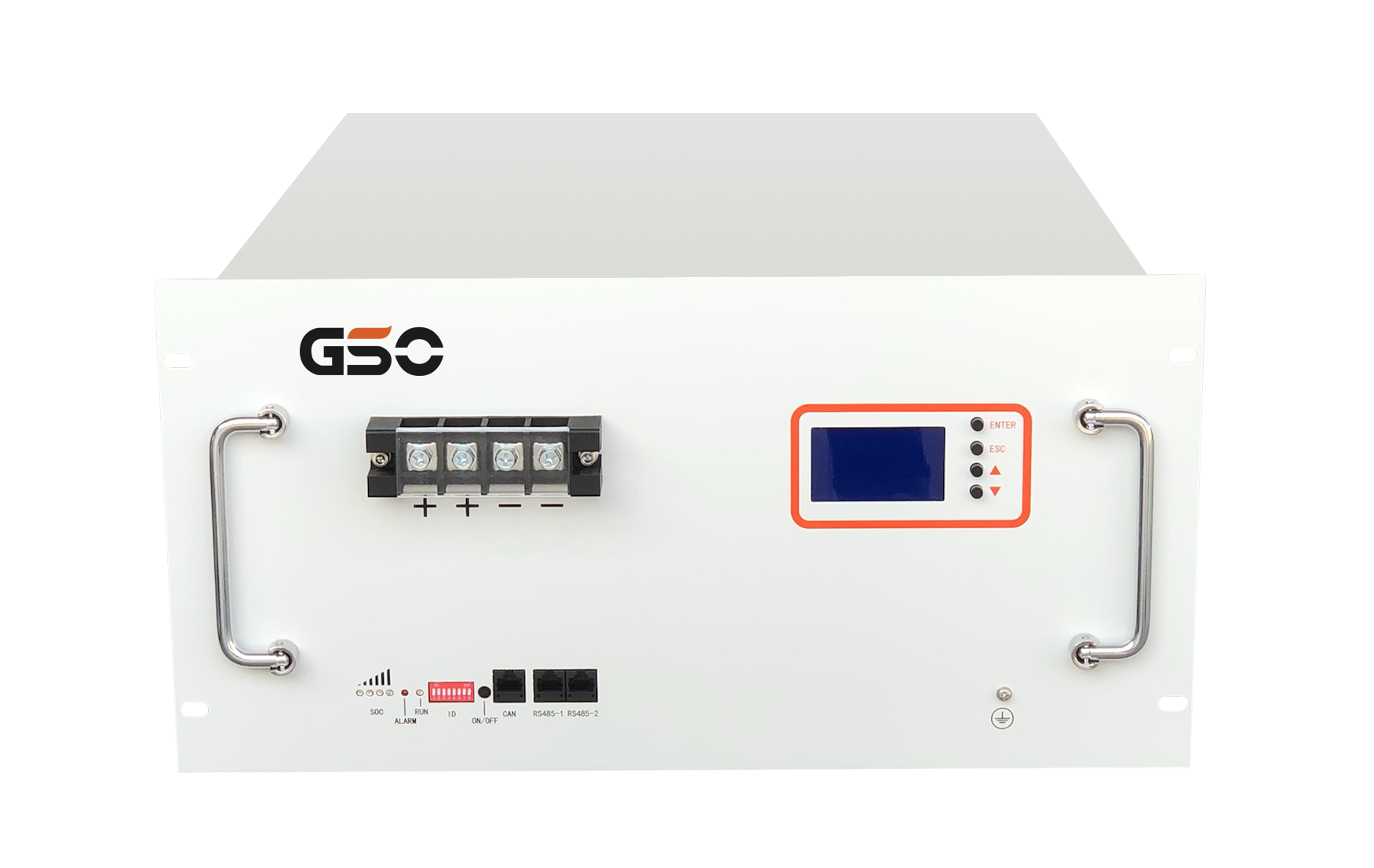
Protocol choice must reflect battery chemistry and the battery management system (BMS) semantics. Lead-acid banks present different charge acceptance curves and float behaviors than lithium chemistries; control strategies that assume fast charge acceptance can degrade lifespan when applied to a lead acid solar battery. Accurate telemetry of temperature, open-circuit voltage, and charge cycles—exposed through the BMS or a charge controller—is therefore critical. Integrators should map protocol payloads to BMS parameters explicitly, avoiding implicit assumptions about SoC or depth-of-discharge calculations. Such precision supports adaptive charging profiles suited to lead-acid electrochemistry and prevents excessive gassing or stratification.
Implementation patterns: telemetry topology and security
Remote telemetry can be structured as edge-first or cloud-first. Edge-first designs aggregate and preprocess data on the inverter or a gateway, sending summarized metrics to the cloud; this reduces data volume and preserves control continuity during network outages. Cloud-first designs stream raw telemetry for centralized analytics and model training. Both patterns require robust authentication and encryption—mutual TLS for session-oriented APIs, or TLS with client certificates for MQTT—plus consideration of firmware update channels and rollback safety. During field deployments I observed repeated failures where insecure OTA processes permitted corrupted updates—an avoidable risk with signed images and atomic update mechanisms.
Common pitfalls and alternatives
Frequent mistakes include under-specifying telemetry frequency, conflating diagnostic logs with control channels, and failing to epoch-synchronize timestamps for event correlation. Edge buffering is often overlooked—packets dropped during cellular handoff lead to stitched timelines and erroneous SoC reconstructions. Alternatives to single-protocol dependence include hybrid stacks: MQTT for telemetry and a REST layer for configuration and historical queries. Such hybrids marry minimal transport overhead with rich configuration semantics—an approach that many systems implement to balance responsiveness and manageability.
Advisory: three golden rules for protocol selection
1) Prioritize semantic clarity: require explicit BMS field mappings and units to avoid chemistry-related misinterpretation. 2) Design for degraded communications: implement persistent edge buffers, heartbeats, and reconnection strategies to maintain control continuity during outages. 3) Compartmentalize channels: separate telemetry, command, and firmware update traffic with distinct authentication and rate limits. These metrics—semantic fidelity, outage resilience, and channel separation—yield measurable gains in uptime, reduced warranty claims, and safer charge control.
On reflection, protocol choice is not purely technical; it is operational. The right EMS protocol reduces field visits and extends battery life—benefits I have validated across commercial rooftop pilots and community microgrids. For integrators seeking solutions that align protocol rigor with reliable hardware, gsopower presents an ecosystem where inverter firmware, telemetry strategies, and battery options converge—useful when the objective is predictable field performance rather than speculative feature parity. —